 Call Us MN: 24/7 confidential, bilingual crisis line (651) 772-1611
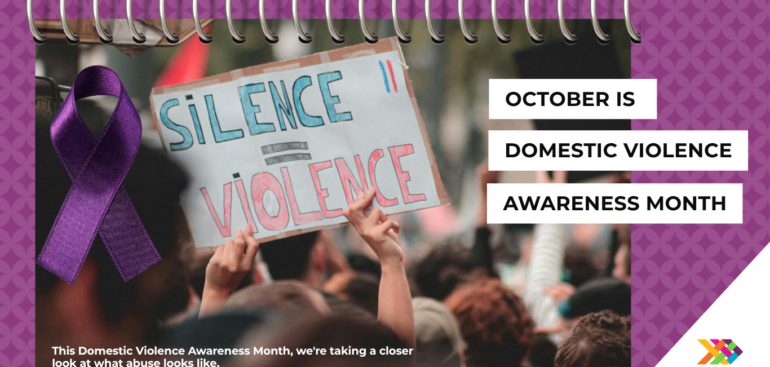
When we hear the words “domestic violence,” many of us picture physical violence: a bruise, an injury, a moment when something has clearly gone too far.
But abuse doesn’t always begin, or appear, that way. It can look like someone checking your phone constantly, deciding who you can spend time with, controlling access to money, pressuring you sexually, tracking where you are, or threatening you or someone you love. It can look like slowly being separated from the people you trust, until you start to question your own experience.
Sometimes abuse is hard to recognize precisely because it has become part of everyday life. This Domestic Violence Awareness Month, Esperanza United is asking our community to look closer, because recognizing abuse can change what happens next.
Abuse is about power and control
Relationships have conflict. People disagree, make mistakes, and sometimes hurt each other’s feelings. Abuse is different. At its core, domestic violence involves behaviors used to gain or maintain power and control over another person, and those behaviors can be physical, emotional, psychological, sexual, financial, or technology-facilitated.
They’re also more common than many people realize. According to the Centers for Disease Control and Prevention, more than 1 in 3 women and 1 in 6 men in the United States have experienced contact sexual violence, physical violence, and/or stalking by an intimate partner in their lifetime and reported an IPV-related impact. Recent CDC data also show that nearly 1 in 3 women and more than 1 in 5 men have experienced psychological aggression from an intimate partner.
Behind those numbers are people of every age, background, income, culture, immigration status, and life experience. Domestic violence can happen to anyone.
That’s the idea behind #Every1KnowsSome1, the national campaign the National Network to End Domestic Violence (NNEDV) leads for Domestic Violence Awareness Month: most of us already know someone who has lived through domestic violence, even if they’ve never said so out loud.
Would you recognize the signs?
Sometimes recognizing abuse starts not with having all the answers, but with asking the right questions. Do you find yourself changing your behavior because you’re afraid of how your partner might react? Does someone regularly check your phone, messages, or location? Are you being discouraged or prevented from seeing friends or family? Does someone control your money or block your access to financial resources? Do you feel pressured into sexual activity? Are threats, intimidation, humiliation, or fear becoming part of your relationship?
One behavior alone may not tell the whole story. What matters is the pattern: power, control, fear, and coercion showing up again and again. If something doesn’t feel right, you don’t have to wait for it to become physical, or to get worse, before looking for information. Esperanza United’s Is This Abuse? resource can help you learn more about different forms of abuse and recognize the warning signs.
Sometimes we recognize the change in someone else first
Awareness isn’t only about what may be happening in our own relationships. Maybe someone you love has become more isolated, cancels plans often, or seems anxious every time their partner calls or texts. Maybe their partner always needs to know where they are. Or maybe you can’t point to one specific thing, you just know something has changed.
Knowing how to respond matters. Supporting someone experiencing abuse doesn’t mean rescuing them or deciding what they should do; survivors are the experts in their own lives. What we can do is listen without judgment, believe what they tell us, stay connected, share resources, and ask how we can support them. Esperanza United’s [Help a Friend] resource offers practical guidance for supporting someone who may be experiencing abuse.
Let’s change the question
Survivors are often asked, “Why don’t they just leave?” But leaving an abusive relationship can involve questions of safety, housing, finances, children, immigration, transportation, isolation, threats, and access to resources. So instead of asking why someone hasn’t left, we can ask what barriers stand between this person and safety, and what we can do to help make support available when they’re ready. That second question belongs to all of us.
In September 2025, domestic violence programs participating in NNEDV’s annual one-day count served more than 84,000 survivors and their children in a single day. Yet more than 13,000 requests for services went unmet, largely because programs lacked the resources, funding, or staff to meet them. Awareness matters, but it has to lead to action.
Reaching out is part of that action. The National Domestic Violence Hotline recently answered its 8 millionth call, chat, and text, 8 million moments where someone reached out and found support. Closer to home, Esperanza United’s crisis line is available every hour of every day: 651-772-1611.
We can all be part of the solution
You don’t need to be an advocate or a domestic violence expert to make a difference. Learn the signs. Talk about healthy relationships. Believe survivors. Challenge messages that normalize control. Know where resources are available, and share them. Speak up when something doesn’t feel right. Support organizations doing this work, and when you’re able, give.
Your actions may look different from someone else’s, but each one helps build a community where abuse is easier to recognize, survivors are met with support instead of judgment, and resources are there when someone reaches out.
This Domestic Violence Awareness Month, our message is simple: abuse doesn’t always look like abuse. Learn to recognize it. Know how to respond. And be part of the solution.
Need support or want to learn more? Explore Esperanza United’s resource
Ready to be part of the solution? Your support helps Esperanza United continue providing culturally responsive resources, advocacy, prevention, and support for survivors and communities.