Call Us MN: 24/7 confidential, bilingual crisis line (651) 772-1611

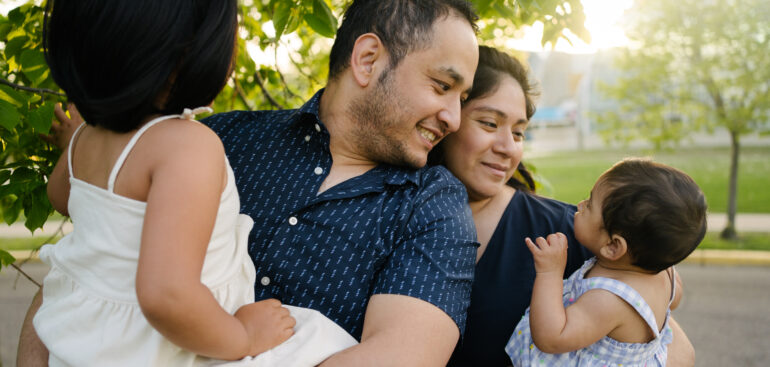
For many Latine families, faith shows up in everyday life: a prayer before a long drive, a candle lit for someone we love, a Sunday spent in community. For survivors of domestic violence, that faith can be a lifeline. It can also, in the wrong hands, become a tool for control.
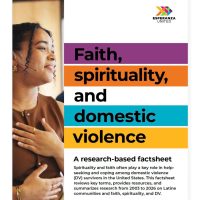
That’s why our team created Faith, spirituality, and domestic violence, a research-based factsheet that brings together more than two decades of research on Latine communities, faith, and domestic violence. Here’s what you’ll find inside.
Faith in Latine communities
Faith looks different across our communities. According to the Pew Research Center, four in ten Latinos in the United States say religion is very important to them, and 43% identify as Catholic. Younger generations are changing that picture: 49% of Latino adults ages 18 to 29 identify as religiously unaffiliated. Spirituality also lives outside of church walls, through connection to the land, holistic healing, and traditional healers like curanderos, sobadores, and yerberos.
Faith as a source of strength
Research shows that faith can be a powerful protective factor for survivors. Religious coping is linked to a greater likelihood of disclosing abuse to friends or family (Sabina, 2012) and to greater social support (Gillum et al., 2006). Spirituality can help survivors manage their emotions, stay connected to their identity, and make meaning as they heal. When survivors seek help, churches and religious leaders are often among the first places they turn, offering a safe space outside the home, a part of safety planning, and referrals to other resources.
When faith is used to harm
Faith can also be used to manipulate, control, or isolate. This is known as spiritual abuse, and it can happen in any religion or belief system. It can look like:
- Guilt and shame around faith
- Isolating someone from their church or religious community
- Using religion to control behavior or to justify abuse
- Misusing scripture to impose unhealthy expectations in a relationship
How faith communities can help
Faith leaders and institutions have a real opportunity to be part of the solution. They can challenge harmful traditions and myths, partner with domestic violence organizations, provide trauma-informed training for church leaders, bring faith practices into healing, and offer practical support like shelter, food, and childcare.
Whether you’re an advocate, a faith leader, or someone who cares about the people in your congregation, this factsheet is for you, and share it with your community. Because when faith and advocacy walk together, survivors don’t have to choose between their beliefs and their safety.
This publication was made possible by Grant Number 90EV0525 from the Department of Health and Human Services, Administration for Children and Families. Its contents are solely the responsibility of Esperanza United and do not necessarily represent the official views of the Department of Health and Human Services, Administration for Children and Families
Download Factsheet